

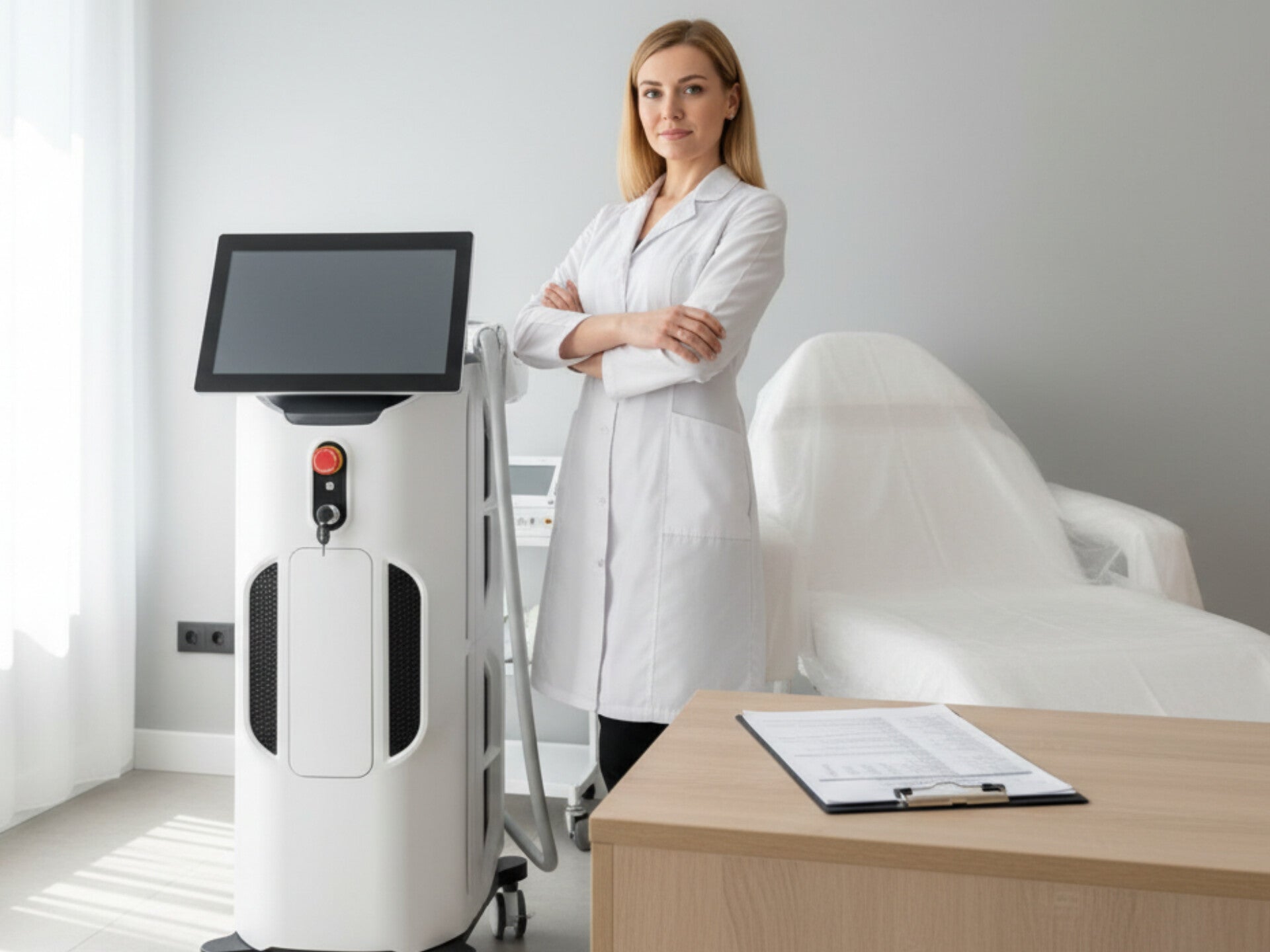
Diode Laser Machine Buying Guide for Clinics: Specs, Lifespan & ROI
12 min read · Updated May 2026
A clinic operator somewhere in the Middle East recently reached out to us. She had bought a $14,000 diode laser two years earlier and was treating about 30 patients a week. The handpiece was dimming. The manufacturer wanted $9,400 for a new diode bar set. Her ROI math, when she ran the original numbers, never included that line item.
This is the most common mistake we see in clinic equipment purchases. A diode laser machine is not a device you buy once and run forever. It is a business asset with operating costs, consumables, training requirements, and a service relationship that decides whether it pays back over five years or eats your margins.
Hair removal is one of the most popular procedures offered in aesthetic medicine due to its repeatability, ease of packaging and the ability to attract and keep patients. However, the incorrect machine can hinder treatment rooms, cause patient discomfort, increase maintenance expenses, and diminish ROI. In the past 10 years we have audited approximately 200 diode platforms on factory floors and clinic rooms. There are a few simple questions that most expensive errors are made from.
What This Guide Covers
This guide outlines the various factors that you should consider before signing a purchase order:
- Wavelengths and patient compatibility
- Cooling system
- Pulse control
- Spot size
- Handpiece lifespan
- Service support
- Realistic ROI across a five-year span.
What Is a Diode Laser Machine Used For?

A diode laser machine is a professional aesthetic machine, which is mainly used for long term hair reduction. It focuses on melanin in the hair follicles using laser energy in the 800-810 nm range (the typical diode wavelength) and creates controlled heat that disrupts hair follicle activity and decreases hair growth in the future.
Common treatment areas include:
- Underarms
- Legs and arms
- Back and chest
- Bikini line and Brazilian
- Face (upper lip, chin, sideburns)
Diode lasers are not just about hair removal; they can help minimize shaving irritation, reduce the likelihood of ingrown hairs, and bundle treatments into a series of predictable results for patients.
Diode laser is NOT IPL. IPL (Intense Pulsed Light) is a broad spectrum of wavelengths in a wider band. Diode laser emits a single wavelength, which is selected to absorb melanin at the correct tissue depth. The difference is important for effectiveness and safety, particularly between various skin tones. This was explained in our article on IPL vs diode laser comparison.
How Diode Laser Hair Removal Works
The principle behind diode laser hair removal is called selective photothermolysis. It may sound like a medical term, but it's quite straightforward. The laser light at the right wavelength travels through the skin and into the pigment of the hair follicles where it is absorbed and changes to heat. This heat is used to cook the portion of the follicle that produces new hair.
Three things decide which one happens:
Anagen Phase Matters
Hair grows in cycles. Only follicles in the active growth (anagen) phase respond well to laser energy. At any given moment, just 20 to 30 percent of hairs in a treatment area sit in anagen. The rest are dormant. This is the entire reason clinics space sessions 4 to 8 weeks apart and patients need 6 to 10 visits for a full course. Anyone selling “one-session permanent removal” is selling biology that does not exist.
Cooling Matters
Without cooling, the same energy that melts melanin in the follicle also fries the skin on top. That is why every serious diode platform now ships with sapphire contact tips, TEC plates, or cryogen spray. Strip that off and you have a burn machine, not a hair removal machine.
Settings Matter
Fluence, pulse width, wavelength, and spot size all need to match the patient. The settings that clear a Fitzpatrick II patient's underarms will leave burns on a Fitzpatrick V patient's bikini line. We have seen this go wrong more times than we like to admit, almost always because an undertrained operator copied the previous patient's chart.
The goal is controlled follicle heating, not surface burning. Wavelength, pulse duration, cooling, and operator training matter as much as raw watts.
Key Diode Laser Machine Specs Clinics Should Compare
Wavelengths: 755 nm, 808/810 nm, 940 nm, and 1064 nm
Single-wavelength 808/810 nm diode platforms remain the workhorse choice. They handle medium-thick dark hair on Fitzpatrick I-IV skin reliably and efficiently. Most established clinics serving general-purpose hair removal use 808 nm systems.
Multi-wavelength platforms are available to add 755 nm (for shallower and finer hair on lighter skin) and 1064 nm (for deeper penetration and safer use on darker skin). These increase the number of patients you can treat, but the premium can be high, and many clinics don't use the extra wavelengths enough to warrant the expense.
Note: Beware of marketing that guarantees “safe for all hair and all skin types.
Power Output and Energy Delivery
Watt ratings on spec sheets can be misleading. What matters is stable energy delivery. Does the machine maintain the rated output throughout the treatment day or does it drop in power after the first hour of treatment? High wattage, low cost platforms might not deliver the same fluence each time, leading to unpredictable results and patient dissatisfaction. Do not rely on brochure specifications, request measured output curves or third party testing.
Spot Size and Treatment Speed
Larger spot sizes treat larger areas faster. A 15×15 mm or 20×10 mm handpiece can clear both legs in 12-15 minutes. A small spot size of 8×8 mm or smaller is more precise for the upper lip and bikini line but slow for legs. The math here is operational: if a treatment that should take 20 minutes takes 35 because of an undersized spot, your room throughput drops by 40%. That is a direct hit to revenue.
Find a platform that has at least one large handpiece and one small/precision handpiece, or a single handpiece that can be adjusted to spot sizes.
Cooling System
There are three types of cooling that are prevalent in the market:
- Sapphire/contact cooling: A cool sapphire tip is pressed against the skin during the treatment. Most common, effective and long-lasting.
- TEC (thermoelectric): Provides sustained low temperature at the contact surface with the use of semiconductor cooling. Suitable for heavy practices.
- Air or cryogen spray: Pre- and post-cooling without contact. Less common on modern diodes.
Whatever the technology, cooling should bring the contact surface to around 0-5°C. Without that, you cannot run fluences high enough for fast effective treatments.
Pulse Duration and Adjustable Settings
Shorter pulses (5-30 ms) work for finer hair and lighter skin. Longer pulses (30-400 ms) spread the heat over time, which is safer for darker skin types where surface melanin would otherwise absorb too much energy.
A diode platform without adjustable pulse duration is limited to a narrow patient base. For a clinic serving mixed Fitzpatrick populations, adjustable pulse settings are non-negotiable.
Handpiece Lifespan and Shot Count
This is the line item most often missed in ROI math. Diode bars degrade with use. Budget handpieces are cheaper upfront but typically deliver only 1 to 2 million shots before output drops below clinically useful levels. Premium handpieces hold clinically useful output for 10 to 30 million shots. That gap matters because handpiece amortization is a real per-session cost. An $8,000 handpiece rated for 2 million shots costs roughly $4 per 1,000 shots; the same $8,000 spent on a 20-million-shot handpiece drops the amortization to $0.40 per 1,000 shots. Over a five-year ROI horizon in a busy clinic, that single line item often outweighs the original sticker-price difference between two platforms.
Certifications and Compliance
Search for FDA registration or clearance (US), CE Mark (EU) and ISO 13485 (manufacturing quality system). They are not evidence of clinical superiority, but they are based on external audits by the manufacturer
Important: certifications are valid for certain models, not brands. A company might have CE Mark on one model but not on the one you are about to buy. Always ask for the certificate by serial or model number.
Quick Spec Checklist Before You Buy

Run through this list before requesting any quote:
|
SPEC |
WHAT TO CHECK |
WHY IT MATTERS |
|
Wavelengths |
808/810 nm plus optional 755 nm and 1064 nm |
Broader skin and hair coverage |
|
Cooling |
Sapphire contact, TEC, water or air support |
Comfort and epidermal protection |
|
Spot Size |
Small and large area options |
Faster treatment room turnover |
|
Pulse Width |
Adjustable range (e.g., 5–400 ms) |
Safer settings for different skin types |
|
Handpiece Lifespan |
Shot count and replacement cost |
Long-term operating cost |
|
Warranty |
Parts, labor, handpiece coverage |
Downtime protection |
|
Training |
Parameter guidance and after-sales support |
Safer operator use |
|
Certifications |
CE, FDA, ISO 13485 by model |
Compliance and buyer confidence |
Once you work through this list, you can heck these diode laser hair removal machines collection for configurations spanning entry-level to multi-wavelength professional platforms.
ROI Analysis for Clinics: How a Diode Laser Machine Pays Back
A diode laser is one of the fastest-payback equipment investments in aesthetic medicine — but only if the underlying assumptions are realistic.
Revenue Variables
The numbers that drive your ROI calculation:
- Average price per session (varies by region and treatment area)
- Sessions per patient package
- Average treatments per working day
- Utilization rate (booked vs available chair time)
- Consumables and handpiece amortization per session
- Operator time and labor cost
- Financing cost if applicable
Simple ROI Formula
Monthly revenue = sessions per day × working days × average session price
Monthly gross profit = monthly revenue − monthly operating cost
Payback period = machine cost ÷ monthly gross profit
Example ROI Scenario
Conservative example using mid-market pricing:
- The machine costs $22,000, the average session cost is $120, and the sessions are 4 per day, 22 business days per month.
- Monthly gross revenue: 4 × 22 × $120 = $10,560
- Monthly operating cost (consumables, labour, room overhead): $4,500
- Payback period: approximately 3.6 months (monthly gross profit of $6,060)
This is the ideal case version. Realistic clinics with lower utilization, slower ramp-up or higher overheads will see payback in 6-14 months. Demand patterns are region specific and patient mix specific; financing terms have an impact on the calculation.
Diode Laser vs IPL vs Alexandrite vs Nd:YAG
Each technology has a different sweet spot:
|
TECHNOLOGY |
BEST FOR |
STRENGTH |
LIMITATION |
|
Diode laser |
Professional hair reduction |
Balance of depth, speed, comfort |
Needs trained operation |
|
IPL |
Broad light-based treatments |
Lower entry cost, multi-use |
Less targeted than true laser |
|
Alexandrite (755 nm) |
Light skin with dark hair |
Fast and effective on suitable patients |
Higher caution on darker skin |
|
Nd:YAG (1064 nm) |
Darker skin and deeper follicles |
Safest for Fitzpatrick V-VI |
Less effective on finer hair |
For more on diode vs IPL specifically, see our IPL vs diode laser comparison.
Patient Comfort and Safety Features Clinics Should Prioritize

Patients who are comfortable on the table book the next package. Patients who flinch every pulse do not. Comfort is not a soft factor; it is the difference between a 2.5-session average and a 7-session average. Features that move the needle:
- Skin contact cooling that maintains low surface temperature throughout each pulse
- Adjustable fluence so you can step up gradually rather than starting at full power
- Longer pulse durations for safer treatment of darker skin
- Test spot capability for new patients or new treatment areas
- Eye protection for both patient and operator
- Operator training depth — settings guidance, not just basic device operation
- Contraindication screening built into intake forms
- Pre- and post-care instructions patients can follow at home
We covered patient pre-treatment expectations in our laser hair removal preparation guide, and what patients should expect during sessions in our laser hair removal pain guide.
Questions to Ask a Diode Laser Manufacturer Before Buying
Before you sign anything:
- What wavelengths does this exact model include?
- What is the real handpiece shot count rating?
- What is the replacement handpiece cost?
- What cooling system does the device use, and what is the rated thermal duty cycle?
- What certifications apply to this exact model — not just to the brand?
- What warranty is included, and what does it cover?
- How fast are spare parts shipped to my region?
- Is remote training included, and for how many operators?
- Can settings be adjusted for different Fitzpatrick skin types?
- Is OEM/ODM branding available if I want a private-label option?
- What is the expected maintenance schedule, and what does it cost?
- Can you put me in touch with a clinic that has been running this model for two years?
That last question is the most important. A manufacturer that cannot connect you to a real existing customer is a red flag.
What to Review Before Requesting a Quote
- Wavelength configuration (single-wavelength vs multi-wavelength)
- Cooling design (sapphire contact vs TEC)
- Spot size options for your treatment menu
- Handpiece shot count and replacement cost
- Warranty terms and after-sales coverage in your region
- Training package and ongoing parameter support
Common Buying Mistakes to Avoid
- Choosing by price alone — the cheapest platform is rarely the lowest five-year cost
- Ignoring after-sales support — downtime kills ROI
- Buying without checking certification documents for the exact model
- Skipping the handpiece replacement cost calculation
- Overbuying multi-wavelength features the clinic will not actually use
- Underestimating operator training requirements
- Believing “painless” marketing — every laser causes some sensation; the question is whether your cooling system manages it
- Using the same parameters for every patient regardless of Fitzpatrick type
A Final Word
The diode laser category has been around long enough that the technology fundamentals are settled. What separates a good clinic purchase from a bad one in 2026 is not which brand of diode bar sits inside the box. It is whether the manufacturer picks up the phone in eighteen months when a handpiece fails on a Friday afternoon.
Buy on five-year operating cost, not on sticker price. Buy on service network depth, not on spec sheet wattage. Buy from a manufacturer who can show you a clinic running their platform two years in, still happy. Anything else is a coin flip with $20,000 of your capital.
Clinics scoping a professional diode platform can review the LEFIS diode laser hair removal machines collection for current configurations, clinic pricing, and OEM/ODM options. For setting realistic patient expectations, our how long laser hair removal lasts guide covers the timing question patients ask in every consultation.
FAQS
How long does it take for a diode laser to work?
Initial shedding of hair is seen 1-3 weeks after the first session and after 3-4 sessions, the hair is visibly reduced. Full treatment courses are 6-10 sessions, with a 4-8 week interval between courses.
How long after diode laser does hair fall out?
Treated hair will start falling out 7-14 days after the treatment. Hair shaft is pushed out by natural skin turnover as it is no longer attached to a viable follicle. Don't get concerned by what appears to be quick regrowth, as much of it is flaking off old hair.
Should I shave before diode laser hair removal?
Yes. Shave treatment area 12-24 hours prior to appointment. The laser attacks the follicle, not the hair shaft that is visible above the skin, and long hair burns on the surface, making it more painful and risky. Waxing or plucking prior to treatment is not advised as the energy is absorbed by the follicle.
Can diode laser remove ingrown hair?
Diode laser thins and eliminates the quantity and size of regrowing hairs, decreasing the amount of new ingrown hairs over time. It does not cure existing ingrowns, but for most patients with chronic ingrowns, there is significant improvement after completing a full course of treatment.
Can I get laser hair removal if I have HSV-2?
You’ll need to consultate with a physician for this. Some patients with active or recurrent herpes simplex in the area to be treated may experience an outbreak or irritation during laser hair removal. Antiviral prophylaxis is used in many patients with controlled HSV without any safety concerns. Talk to the clinic and your doctor about your medical history before you make an appointment.
Does diode laser tighten skin?
The diode laser is not a laser that is used for skin tightening. If skin tightening is the main objective, RF microneedling, HIFU or fractional CO2 would be more appropriate technologies, but if a mild collagen response is desired over a series of treatments, some controlled thermal energy can be applied.
Which is better, IPL or diode laser?
Diode laser is more focused, more powerful, and more effective for long-term hair reduction. IPL is more cost effective and more flexible across non-laser indications. For a clinic where hair removal is a core revenue line, diode almost always wins on five-year ROI because the higher capture rate per session, faster room throughput, and broader Fitzpatrick coverage compound over thousands of patient visits. The rest of this diode laser machine buying guide walks through the specs and service questions that actually decide whether that ROI gets delivered or not.
What are the disadvantages of laser diodes?
More expensive up front, trained operators are required, not as effective on white/gray/very light hair, multiple sessions over a number of months, and handpiece amortization is part of operating cost. There is also some variation from batch to batch in power output and cooling consistency for middle and lower tier platforms.
What does a laser diode do?
The coherent light emitting semiconductor device is called a laser diode (usually 808 nm in aesthetic systems). Bars and arrays of multiple diodes are used to create the higher power required for clinical treatments.
What is another name for diode laser?
When they are used with multiple wavelengths, they can be referred to as 808 nm laser, 810 nm laser, semiconductor laser, or triple-wavelength laser, in aesthetic medicine. All these refer to the same technology.
What hair removal method is best to avoid ingrown hairs?
Diode laser hair reduction is the best solution for ingrown hair reduction when it comes to reducing ingrown hair density and thickness in regrowing hair. The patients who have chronic razor bumps or folliculitis in the bikini area, on the beard or in the underarms area benefit the most.
Sources
- Laser Hair Removal: OverviewAmerican Academy of Dermatology
- Laser Hair Removal: PreparationAmerican Academy of Dermatology
- Laser Hair Removal: FAQsAmerican Academy of Dermatology
- Laser Hair RemovalNCBI Bookshelf · StatPearls
- Laser Hair Removal: Overview and MechanismMayo Clinic
- Laser Hair Removal: How It Works and What to ExpectCleveland Clinic
- Lasers in DermatologyDermNet NZ
- Hair Removal TechniquesDermNet NZ
- Laser Therapy in Skin of ColourDermNet NZ
- Efficacy of Lasers and Light Sources in Long-Term Hair Reduction: A Systematic ReviewPubMed · Journal of Cosmetic and Laser Therapy
- Diode Laser 805 Hair Removal Side Effects in Groups of Various Ethnicities — Cohort Study ResultsPMC · Journal of Lasers in Medical Sciences
- Efficacy and Safety of Hair Removal with a Long-Pulsed Diode Laser Depending on the Spot SizePMC · Annals of Dermatology


Looking for something else?
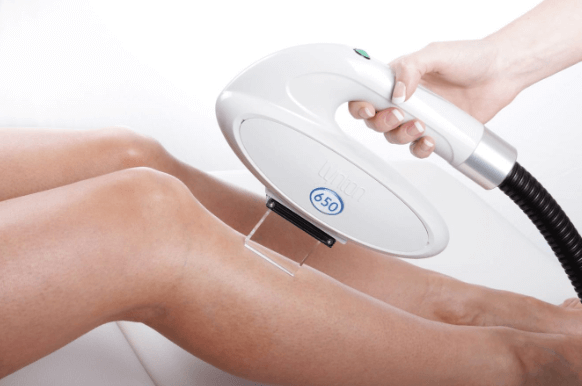
Diode Laser Machine Cost & Pricing Factors
LEARN MORE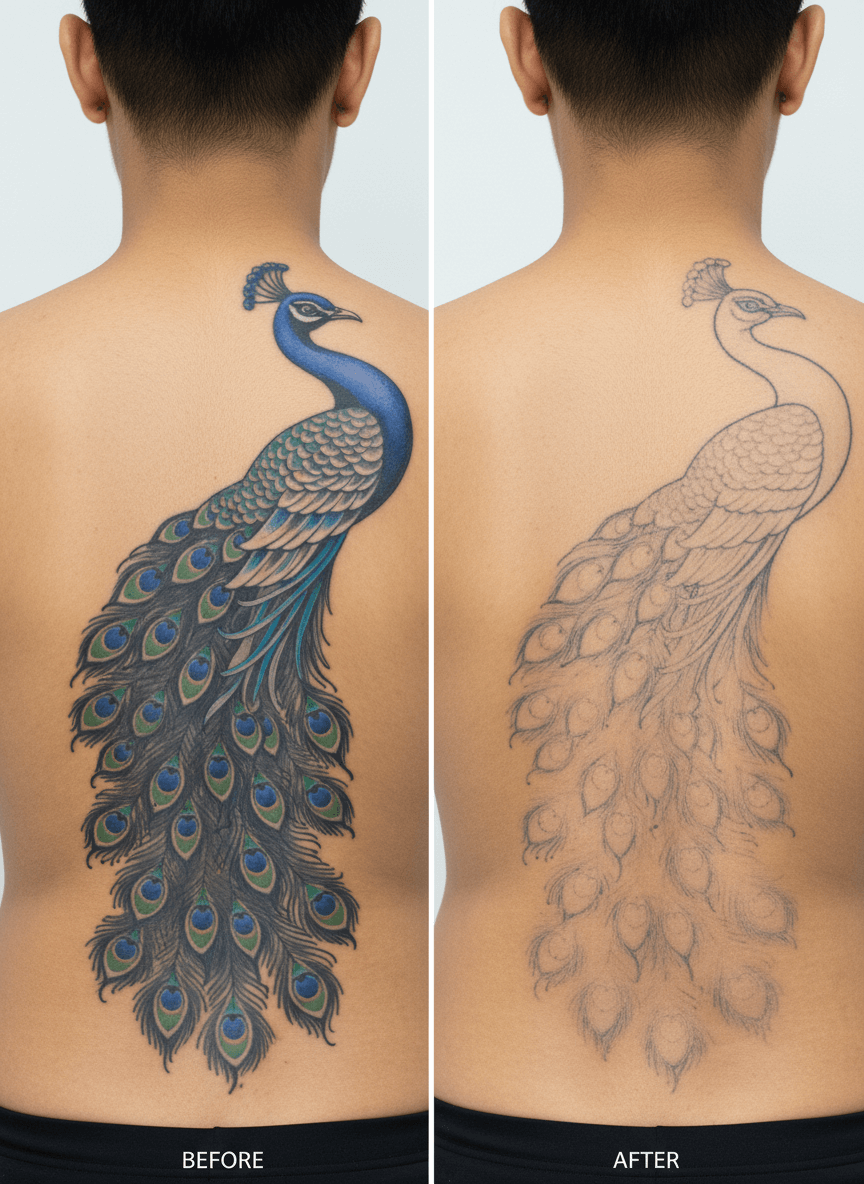
What are the best lasers for tattoo removal
LEARN MORE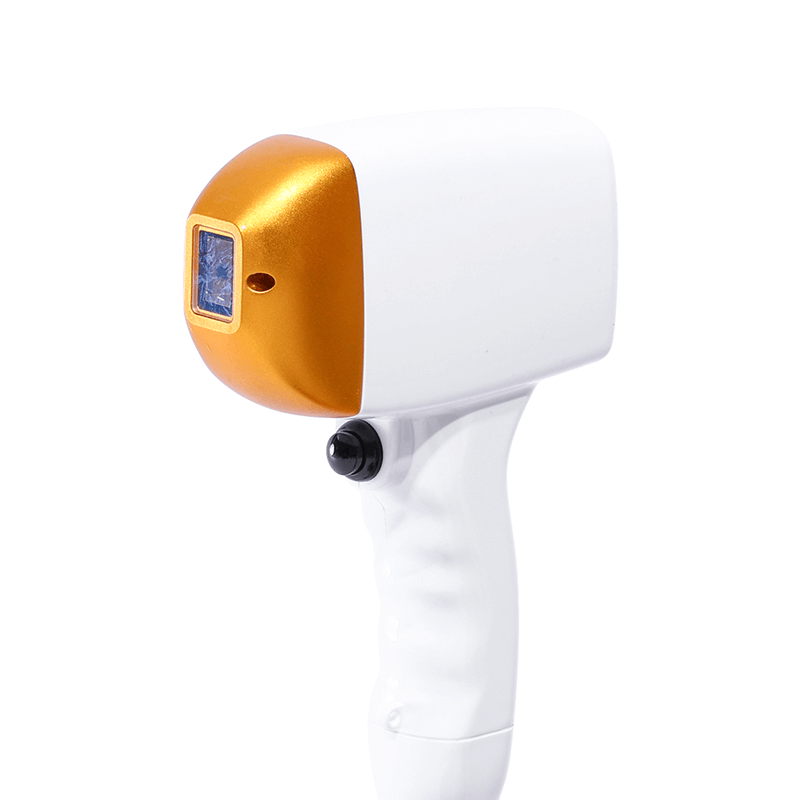
808/810 vs Triple-Wavelength (755/808/1064)
LEARN MORE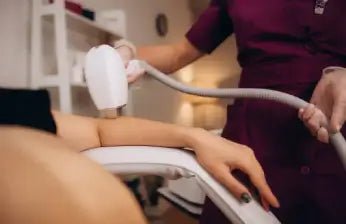
Diode Laser Buyer’s Guide for Clinics
LEARN MORELooking for something else?

HIFU vs Ultherapy: Technology & Results
LEARN MORE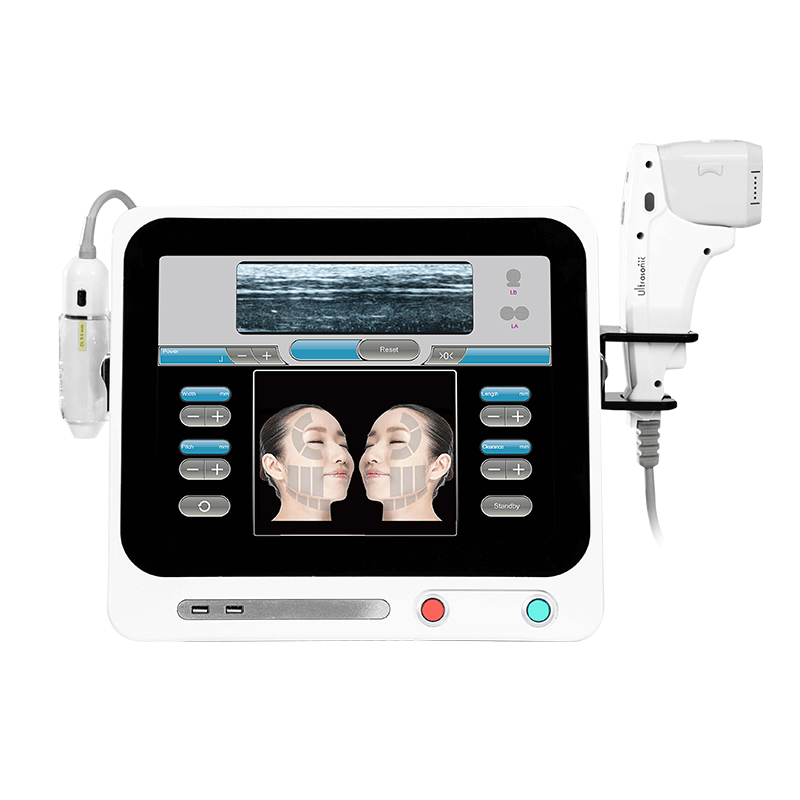
HIFU Facial: Results, Protocols & Downtime
LEARN MORE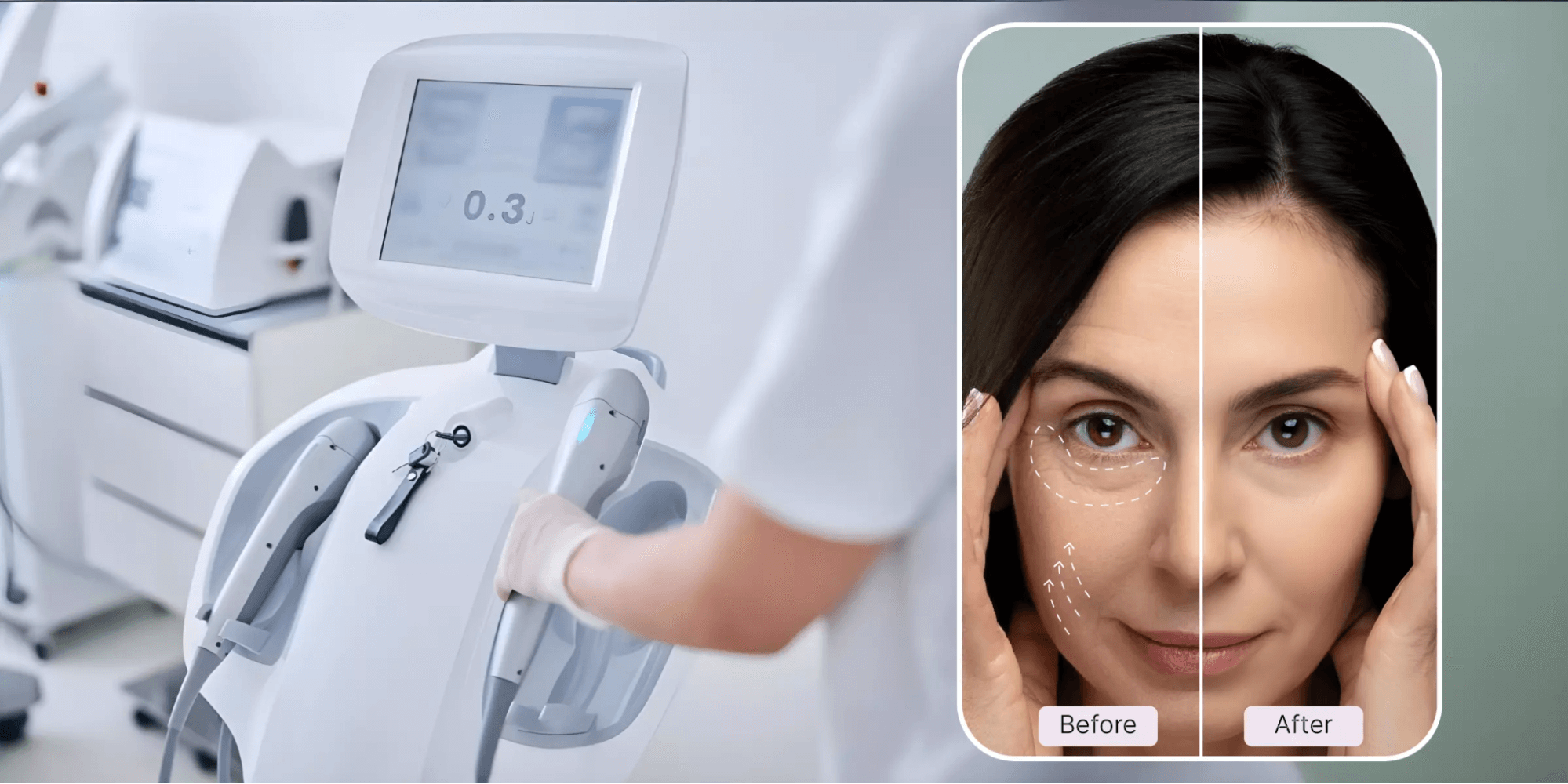
HIFU Machine Cost & ROI for Clinics
LEARN MOREYou may also like


Further reading
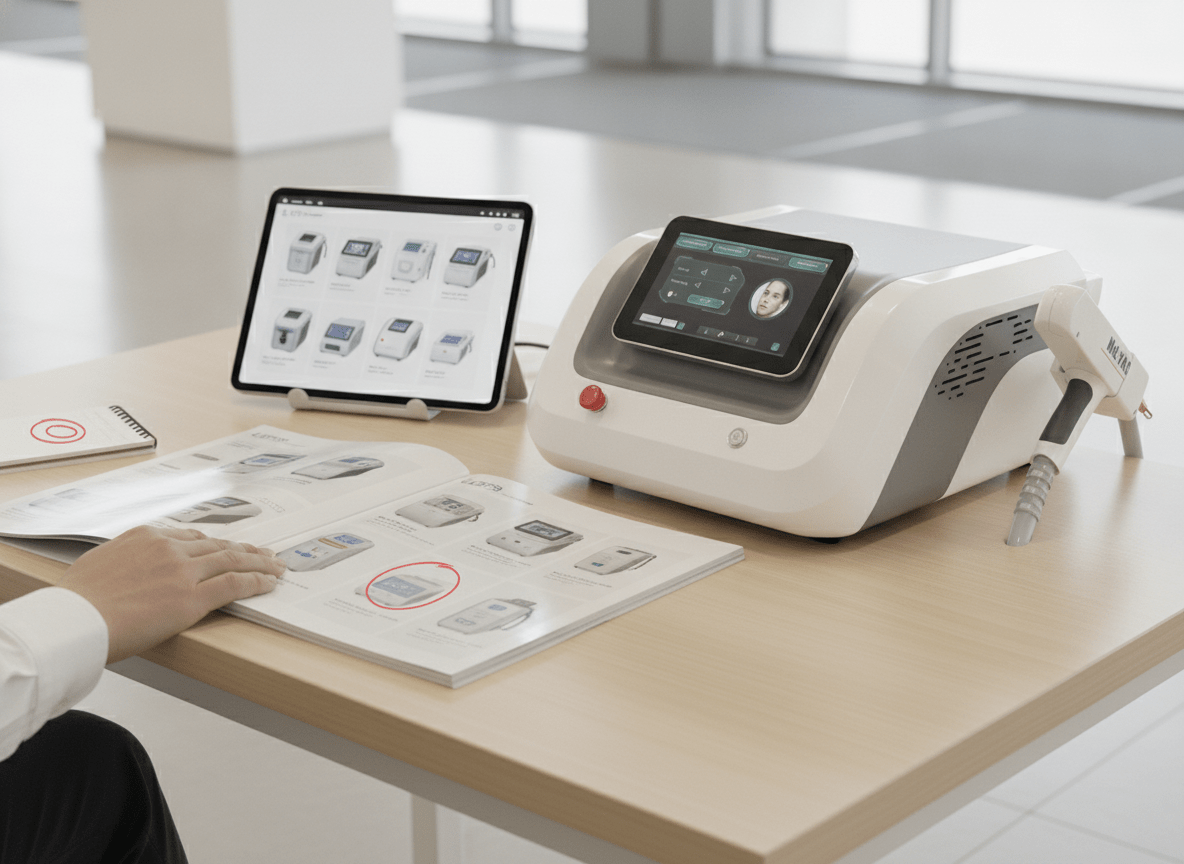
OEM vs ODM Beauty Equipment: Which Model Is Better for Aesthetic Device Businesses?
Non-Surgical Skin Tightening Machines: RF vs HIFU vs Laser Explained
RF Microneedling Devices Guide: How to Choose a Professional Machine?


